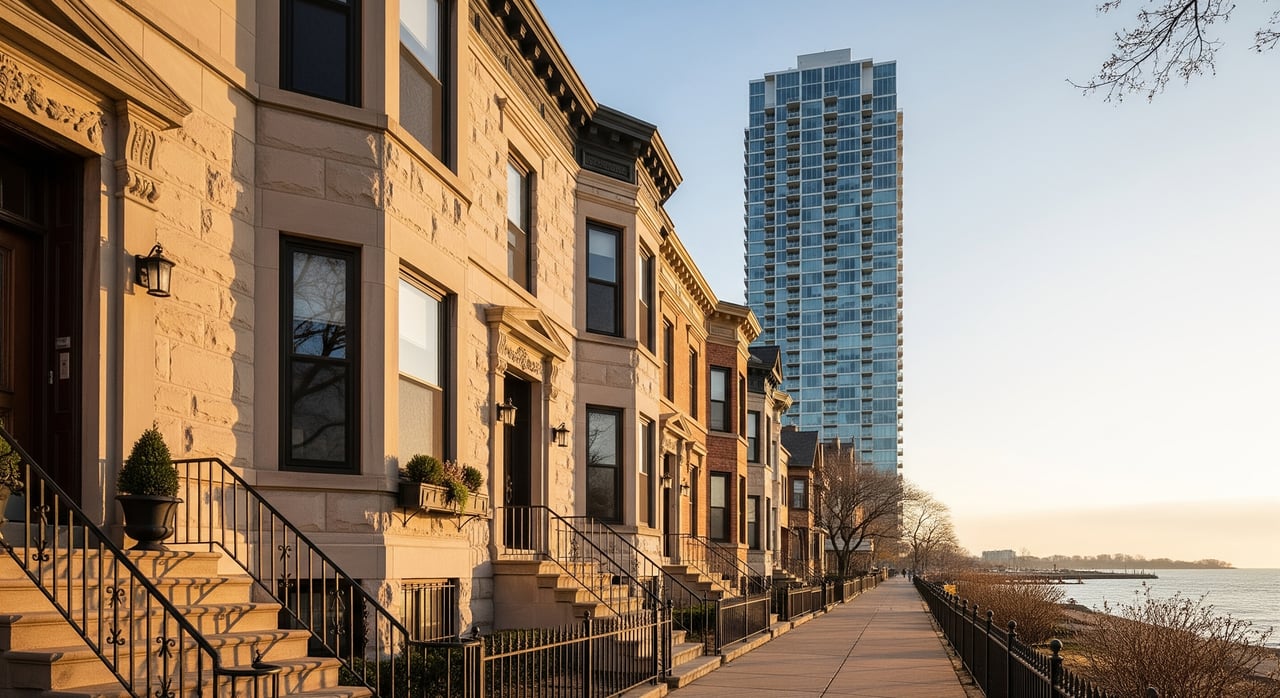
Trying to decide between a co-op and a condo in Edgewater? You are not alone. The buildings along Sheridan Road and Broadway offer great options, but the differences can affect your budget, financing, and day-to-day life. In this guide, you will learn how co-ops and condos differ, what to expect with financing and fees, and how to choose the right fit for your goals in Edgewater. Let’s dive in.
Co-op vs. condo basics
What you own
- Condo: You own a specific apartment as real property plus a share of the common elements through the association. Ownership transfers by deed, and you receive your own property tax bill.
- Co-op: You own shares in a corporation that owns the building, and you get a proprietary lease giving you the right to live in a specific unit. Transfers involve stock and lease assignments rather than a deed.
For a high-level comparison of how these structures work, see the National Association of Realtors overview on condominiums and cooperatives for consumers. You can also review the legal framework for Illinois condos in the Illinois Condominium Property Act, which guides many association rules and processes in Chicago.
- Learn more: NAR field guide on condos and co-ops
- State law: Illinois Condominium Property Act
Why it matters
- Co-op boards generally have stronger control over admissions, subletting, and renovations because they govern through the proprietary lease. Condo associations enforce rules, but they usually have less power to deny a sale.
- Condo sales and closings are more standardized. Co-ops can add extra steps that may affect timelines and resale.
Financing differences in Edgewater
Condos: broader options if the project is approved
- Conventional loans and many first-time buyer programs are common for condos. FHA and VA loans may be available if the building is on the approved list and meets project standards.
- Lenders will review both you and the building, including budget, reserves, insurance, litigation, and owner-occupancy ratios.
Helpful resources:
- FHA project rules: HUD condominium approval guidance
- Mortgage basics: CFPB Owning a Home
- Conventional project standards: Fannie Mae project standards
Co-ops: specialized share loans and stricter profiles
- Most government-backed programs focus on real property, so co-op share loans are typically offered by portfolio lenders or banks that specialize in co-ops. Terms vary by building and lender.
- Many co-op boards expect stronger financials, such as higher down payments and robust post-closing reserves. Each building sets its own policies, so ask for details before you make an offer.
Down payment and reserves
- Condos: Down payments depend on loan type. Some programs allow lower down payments if the project qualifies.
- Co-ops: Boards often prefer larger down payments, for example 20 percent or more, plus proof that you can cover several months of maintenance after closing. Standards differ by building.
Project approval and review
- Condo loans involve a second layer of underwriting for the building. Your lender will check the association’s financial health, reserves, insurance, and any litigation.
- Co-op loans require a review of the co-op corporation’s financials and any building-level mortgage. You will also need board approval, regardless of lender approval.
Monthly fees and true cost of ownership
Condo HOA dues
- Typically cover common-area maintenance, building insurance for shared elements, management, amenities, and reserves. They do not include your unit’s property taxes or mortgage interest.
Co-op maintenance
- Often includes your share of building operating costs, property taxes, reserves, staff, and sometimes utilities. If the building has an underlying mortgage, part of your maintenance helps cover that debt.
Because taxes or building-level debt may be included, co-op maintenance can look higher than condo dues. The right way to compare is to calculate your total monthly carry: loan payment plus HOA or maintenance, and then note what is included.
Taxes and potential deductions
- Condos: You usually pay property taxes directly and may itemize mortgage interest and taxes, subject to IRS rules.
- Co-ops: The corporation pays building taxes and mortgage interest. You may receive an allocation of your share for itemized deductions. Always confirm with a tax professional.
Reference: IRS Publication 936 on home mortgage interest
Rules, approvals, and resale
Board approvals
- Co-ops typically require a detailed application package, financial statements, reference letters, and an interview. Boards can reject applicants for financial or other reasons tied to the building’s policies.
- Condos may require an application and background check, but approvals are usually administrative unless there are rule violations or unpaid assessments.
Subletting and renovations
- Co-ops commonly limit subletting or require owner occupancy for a period. Renovations often need board approval.
- Condos may allow rentals with caps or minimum lease terms, and renovations typically follow clear rules and permits. Always review building documents before you commit.
Resale and timing
- Co-op closings can take longer due to board review. The buyer pool can be narrower because of financing and policy constraints.
- Condos usually attract a wider range of buyers, which can help liquidity and shorten days on market.
Edgewater-specific insights
Building styles and age
Edgewater’s lakefront corridor has a mix of pre-war high-rise buildings and newer construction. Many older co-ops and condos offer larger rooms and classic layouts, while newer condos along busy corridors may emphasize modern finishes and amenities. Age and style affect maintenance needs, reserve funding, and insurance costs.
Lakefront location considerations
Sheridan Road and nearby lake-adjacent buildings can carry premium pricing and more extensive common-area upkeep. Higher fees may reflect staffing, facade maintenance, elevators, and lakefront-related costs. Ask about recent and planned capital projects.
Local taxes and records
When you compare total monthly costs, account for property taxes, any special assessments, and what is included in maintenance or HOA dues. You can research local property data with the Cook County Assessor, and review deed or document history through the county’s recording office at the Cook County Clerk Recording Division.
How to choose the right fit in Edgewater
- Clarify how you plan to live in the home.
- If you want the option to rent the unit, a condo may be a better fit. If you prefer a more managed, owner-occupied culture, a co-op may align with your goals.
- Talk to a lender before you shop seriously.
- Ask if they finance co-op share loans and what down payment and reserves they expect. If you need FHA or VA, confirm whether the condo project is approved before you make offers. See HUD condo approval guidance and Fannie Mae project standards for context on project eligibility.
- Compare total monthly carry.
- For each unit, calculate mortgage plus HOA or maintenance. Note whether maintenance includes taxes or an underlying building mortgage.
- Review building documents early.
- Request budgets, financial statements, reserve balances, recent meeting minutes, and any pending assessments. For co-ops, ask for the proprietary lease, house rules, and application requirements. For condos, review the declaration, bylaws, and rules.
- Consider your resale timeline.
- If you expect to sell within a few years, the broader financing eligibility of condos can help with liquidity. If you plan to stay long term and value building-control policies, a co-op can be appealing.
Buyer checklist for Edgewater lakefront buildings
Use this list while you tour and compare properties:
For any building:
- Last 2 to 3 years of financials, current budget, and reserve balance or study
- Recent board or association minutes from the last 6 to 12 months
- Insurance master policy details and deductible
- Parking, storage, laundry, and services included in dues
- Any special assessments, recent or pending
For condos:
- Is the project FHA or VA approved, if you plan to use those programs?
- Percentage of rental units, litigation status, and assessment delinquency rate
- What HOA fees include and any fee increases on the horizon
For co-ops:
- Full application packet requirements and typical approval timeline
- Minimum down payment, post-closing reserves, and credit standards
- Sublet and pet policies, renovation approval steps
- Any underlying building mortgage and how it impacts monthly maintenance
- Transfer, flip, or move-in fees due at closing
- Whether a board interview is required and what to expect
When a co-op might fit you
- You value a more controlled, owner-occupied environment with clear house rules.
- You prefer larger, classic layouts often found in older lakefront buildings.
- You have a healthy down payment and strong post-closing reserves.
- You plan to stay for several years and are comfortable with a longer approval process.
When a condo might fit you
- You want broader financing options and potentially a faster closing.
- You may want rental flexibility or anticipate relocating in a few years.
- You prefer standardized resale mechanics and a wider buyer pool when it is time to sell.
- You like newer finishes or amenity packages common in recent construction.
Work with a local guide you can trust
Buying in Edgewater is about fit, financing, and the building’s health. A knowledgeable local team can help you compare total monthly costs, spot red flags in budgets and minutes, coordinate lender questions on co-op share loans or condo project approvals, and guide you through board or association steps. If you are weighing a co-op versus a condo along Sheridan or Broadway, reach out to schedule a focused strategy call with Josh Krish. We will help you zero in on the right building, secure the right financing, and move from search to closing with confidence.
FAQs
What is the main difference between co-ops and condos in Edgewater?
- In a condo you own real property by deed and pay your own tax bill, while in a co-op you own shares in a corporation and receive a proprietary lease, with taxes often included in monthly maintenance.
How do FHA and VA loans affect buying a condo in Edgewater?
- FHA and VA financing may be available only if the condominium project is approved under those programs, so check the building’s status using HUD condominium approval guidance and confirm with your lender.
Are co-op maintenance fees usually higher than condo HOA dues?
- Co-op maintenance often appears higher because it can include property taxes, reserves, staff, utilities, and part of any underlying building mortgage, while condo HOA dues usually exclude taxes and your mortgage.
What documents should I request during due diligence in Edgewater?
- Ask for financials, budgets, reserves, recent minutes, rules, insurance details, and any special assessments; for co-ops also request the proprietary lease and full application packet.
Where can I check property tax information for an Edgewater home?
- Use the Cook County Assessor for assessments and tax information and the Cook County Clerk Recording Division for recorded documents and deed history.